Home › Anatomy topics › Digestive system
The digestive system, in 3D
Follow the gut from the oesophagus to the rectum in 63 named segments, split the stomach into its five regions, and trace a meal through every organ it passes.
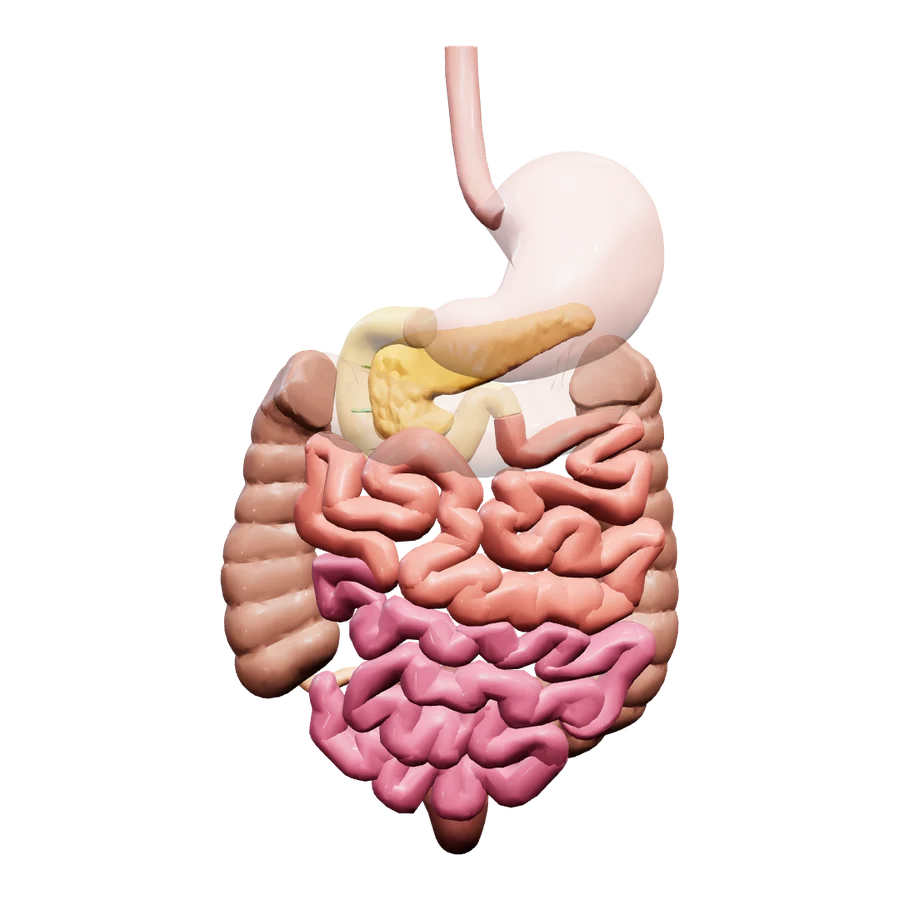
What you can do in the viewer
- Select a segment. Click any part of the gut for its name and notes.
- Split the stomach. Switch on the regions view to see the cardia, fundus, body, pyloric antrum and pylorus.
- See the helpers. Show the liver, gallbladder and pancreas beside the gut.
- Follow a meal (paid plans). A guided journey from the mouth to the rectum, with a caption at each step.
Plans. Every account can use the Skin, Muscles, Skeleton and Organs layers and every named part in them. The guided journeys, the Vessels layer, X-ray and section views, lessons and the certificate need a paid plan. In the first free week you can read the structures list and use the layer switches; switching single structures on and off opens after that. See Pricing.
What is in the models
- Digestive tract: 63 named segments. The oesophagus, stomach, duodenum, the jejunum and ileum in thirds, the colon from caecum to sigmoid, the appendix and the rectum.
- Stomach regions: the surface cut into five regions using the oesophageal opening and the pylorus as landmarks. The division is approximate, because the regions blend into each other in life.
- Pancreas: a soft lobulated gland with a head, neck, body and tail and the pancreatic duct along its length.
- Liver and gallbladder: see the liver and gallbladder page.
A meal, step by step
This journey is part of the paid plans. The journey runs through the mouth, oesophagus, stomach, small intestine, large intestine and rectum, lighting each organ in turn with speed, pause and step controls. These are teaching aids for education and reference, not patient-specific models.
What each part does
- Stomach: stores food, mixes it with acid and enzymes, and releases it in small amounts.
- Small intestine: absorbs nutrients across its wall.
- Colon: reclaims water and salts.
- Pancreas: secretes digestive enzymes into the duodenum and releases insulin and glucagon into the blood.
Frequently asked questions
How many parts of the gut can I select?
The digestive tract model has 63 named segments, from the oesophagus to the anal canal.
What are the five regions of the stomach?
The cardia, the fundus (the dome above the oesophageal opening), the body, the pyloric antrum and the pylorus. The division is approximate, because the regions blend into each other in life.
What does the pancreas do?
It has two main jobs. Its exocrine cells release digestive enzymes into the duodenum, and its endocrine islets release hormones such as insulin and glucagon into the blood to regulate blood glucose.
Can I follow food through the body?
Yes. The digestion journey follows a meal from the mouth to the rectum, organ by organ, with a short caption at each step.
Keep exploring
See it in 3D
Open the viewer and explore every structure yourself. For education and reference only.
Last updated 23 November 2026